
The historical origin of Dehua porcelain sculptures
Time:
2024-03-25
Source:
Dehua porcelain sculptures have a long history. According to the 238 kiln sites from the Tang to Qing Dynasties discovered by Dehua archeology, combined with the Neolithic hard pottery and printed pottery pieces collected in the county museum, porcelain unearthed from local ancient tombs and a large number of specimens from ancient kiln sites Analysis and speculation indicate that Dehua ceramic production began in the Neolithic Age, flourished in the Tang, Song, and Yuan Dynasties, flourished in the Ming and Qing Dynasties, and developed in the contemporary era.
In the late Tang Dynasty, the ceramic industry in Dehua was relatively developed, and the first ceramic monograph "Ceramic Industry Law" was compiled. In the Song Dynasty, the porcelain making process has adopted wheel-making, molding and tire forming techniques, and dragon kilns were used to fire a large number of various types of celadon, blue-and-white porcelain, white porcelain and a small amount of black-glazed porcelain. In the Yuan Dynasty, Dehua began to build "chicken cage kilns". Ceramic firing developed from the reduction firing technology in the early Song Dynasty to the oxidation firing technology. The texture of the products was shiny and smooth, like fat and jade. During the Song and Yuan Dynasties, Dehua porcelain was exported in large quantities and became one of the main export commodities of the "Maritime Silk Road" at that time. The Italian traveler Marco Polo praised Dehua porcelain in "The Travels of Marco Polo" as "there are many porcelain markets and exquisite production"; the Dehua porcelain he brought back is now collected in the Italian Museum and is called "Marco Polo". Luo porcelain". By the Ming Dynasty, Dehua ceramics production technology had reached a new level from shape to glaze color. In 1637, Song Yingxing's "Tiangong Kaiwu" recorded: "Dehua kilns can only produce porcelain fairies, exquisite figures, and toy porcelain." At the end of the Ming Dynasty and the beginning of the Qing Dynasty, the Dehua ceramics industry entered its heyday, especially the 350,000 pieces of Dehua blue and white porcelain discovered in the "Taixing" shipwreck, which further proves that the production and export of Dehua porcelain reached its heyday in the Qing Dynasty.
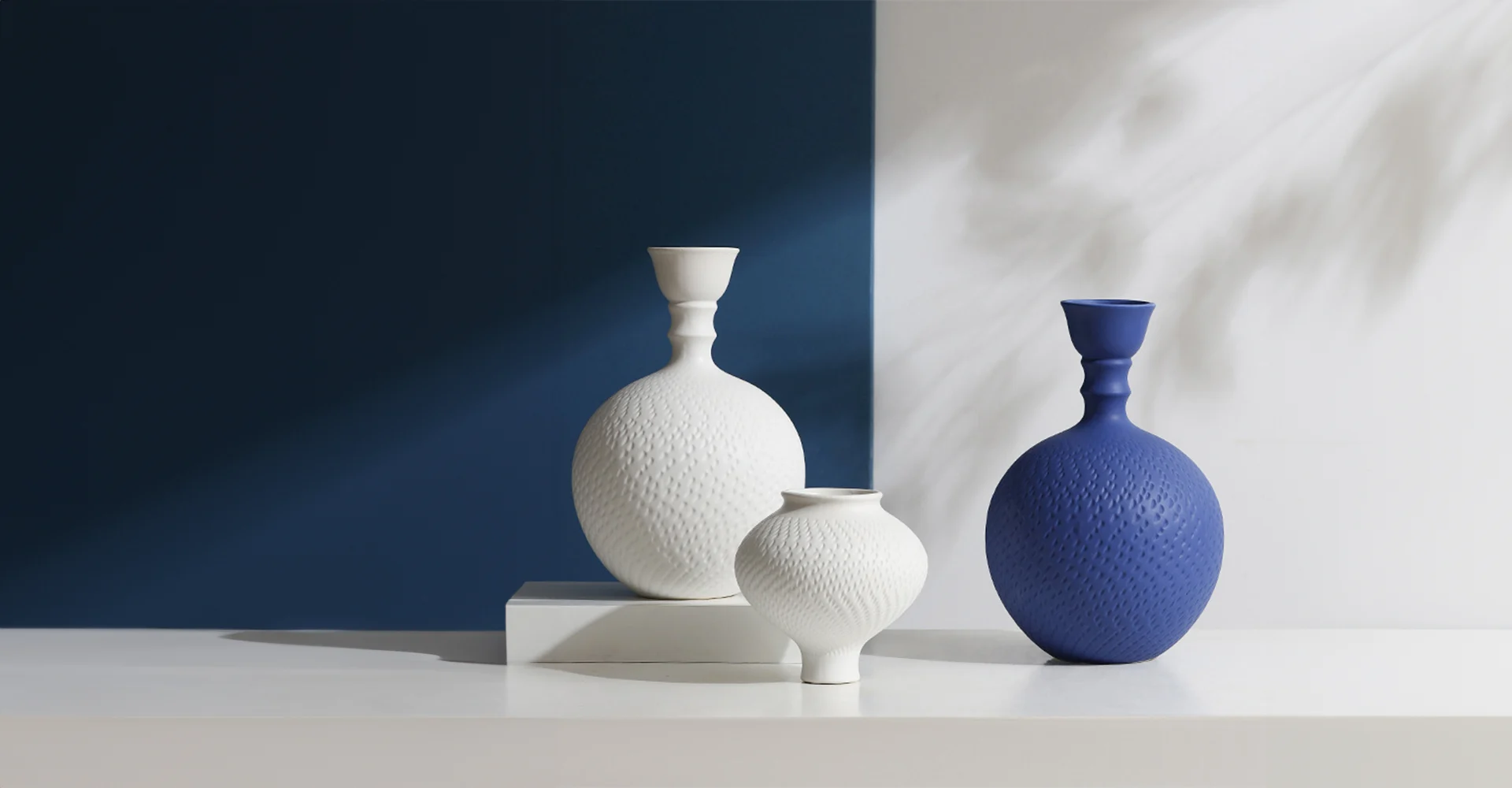
Dehua porcelain sculptures began in the Song Dynasty and are a variety of ceramic art developed to meet the needs of religious culture. With the maturation of porcelain sculpture techniques, the continuous improvement of the raw materials of porcelain clay and glaze, and the long-term accumulation of firing techniques, by the Ming Dynasty, He Chaozong used local kaolin with pure texture as raw material to produce exquisite Dehua porcelain sculptures. He reached an artistic peak and formed his own unique artistic style. It is famous for its "warm, delicate and crystal-clear porcelain, exquisite and elegant porcelain sculptures and ingenious workmanship". It is known as "Chinese White" and "Oriental Art Treasure" and attracts the attention of people at home and abroad. It enjoys the lofty status of a world art treasure. . At the end of the Ming Dynasty and the beginning of the Qing Dynasty, Dehua porcelain sculpture entered its heyday. After the late Qing Dynasty, Dehua porcelain industry declined and the art of porcelain sculpture withered and faded. However, a few folk artists such as Su Xuejin and Xu Youyi persisted in the porcelain making industry during the difficult years, inherited the tradition, and were determined to innovate. Their works such as "Kneaded Porcelain Plum Blossoms", "Mulan Joins the Army", and "Guan Gong" have been sold in Panama, the United Kingdom, and Japan. Waiting for the gold medal at the international expo. After the founding of the People's Republic of China, Dehua porcelain industry gained new life. Dehua porcelain carvings, Jianbai porcelain and Gaobai porcelain were known as the "three golden flowers" of modern Chinese porcelain. The products were exported to more than 150 countries and regions on five continents. area. Especially since the reform and opening up, Dehua has comprehensively promoted kiln renovation and firing technology innovation, vigorously implemented the strategy of "promoting porcelain through science and technology, and rejuvenating porcelain through art", and built many ceramic industrial zones. Ceramics has become a pillar industry in Dehua, and porcelain carving has developed With rapid changes and new leaps forward, it has been named the "Hometown of Chinese Ceramics", "Hometown of Chinese Folk Art" and "Chinese Porcelain Capital". In 1993, Li Peng, Premier of the State Council, wrote an inscription in his own words: "Dehua Ming Porcelain, the Pearl of the Porcelain Country". From the Qing Dynasty to the present, Dehua porcelain sculptures have basically inherited the artistic style of He Chaozong, but there have also been certain evolutions and developments in each period.
Related News

2024-03-29 14:41
Halloween 2023: 7 spooky home decor ideas you must bookmark
Get ready for the season of pumpkin spice lattes and horror movies because Halloween is just around the corner! To help you celebrate this spooky occasion in style, we’ve put together a list of seven decor ideas that will give your home that perfect Pinterest-worthy Halloween look.
2024-03-29 14:24
The week’s news in the ceramic art world – June 14, 2023
The Hunterdon Art Museum in Clinton (New Jersey) recently opened Claybash 2023, a juried exhibition exploring the innovation and diversity of contemporary ceramics by artists from across the United States. The first in a series of triennial exhibitions planned by the museum, Claybash 2023 features works by 42 ceramic artists selected by juror Jennifer Martin, executive director of The Clay Studio in Philadelphia.